Understanding SIM Swap Attacks: The Rising Threat to Your Cryptocurrency Security
Understanding SIM Swap Attacks: The Rising Threat to Your Cryptocurrency Security
In the rapidly evolving world of cryptocurrency, security remains a top priority for investors, traders, and enthusiasts alike. Among the myriad of threats that loom over digital asset holders, SIM swap attacks have emerged as a particularly insidious and increasingly common method used by cybercriminals to gain unauthorized access to accounts. This article delves deep into the mechanics of SIM swap attacks, their impact on the btcmixer_en2 niche, and most importantly, how you can protect yourself from falling victim to this sophisticated form of fraud.
As the btcmixer_en2 community continues to grow, so does the sophistication of cyber threats targeting its members. SIM swap attacks are not just a theoretical risk—they are a real and present danger that can result in devastating financial losses. By understanding how these attacks work, recognizing the warning signs, and implementing robust security measures, you can significantly reduce your vulnerability to this type of fraud.
---The Mechanics of a SIM Swap Attack: How Cybercriminals Exploit Your Phone Number
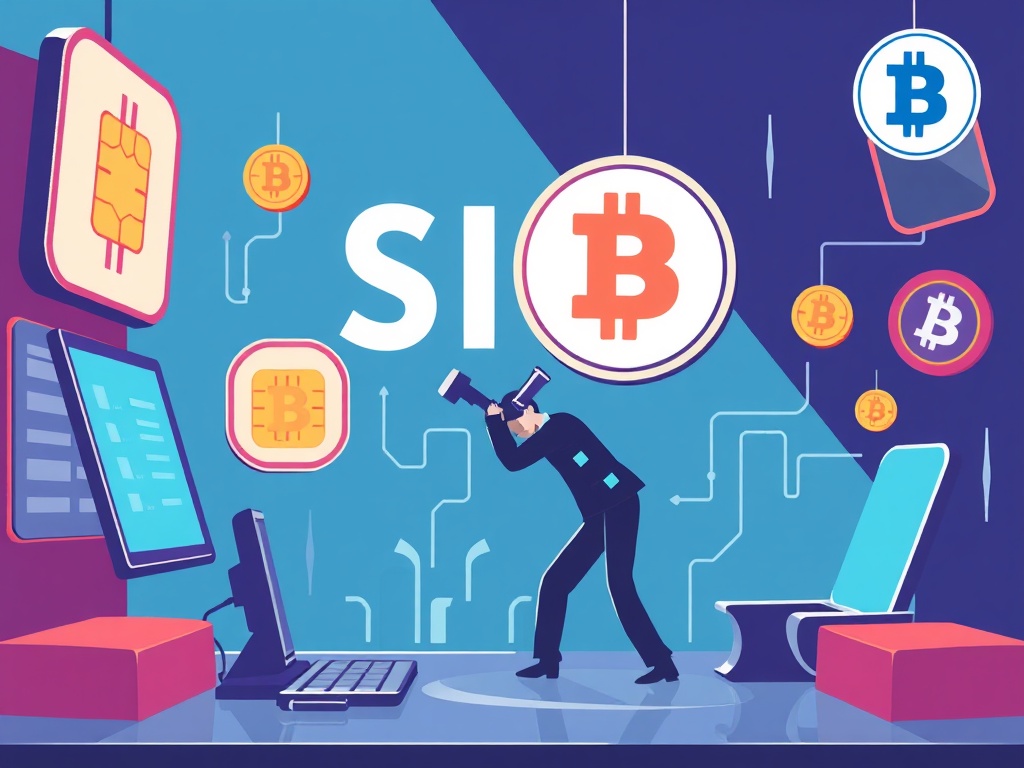
A SIM swap attack is a form of identity theft where a malicious actor convinces your mobile carrier to transfer your phone number to a SIM card they control. Once they have access to your phone number, they can intercept SMS-based authentication codes, reset passwords, and gain control of your cryptocurrency accounts, email, and other sensitive services. This section breaks down the step-by-step process of how a SIM swap attack unfolds and why it is so effective.
Step 1: Gathering Personal Information
Before launching a SIM swap attack, cybercriminals need to gather as much personal information about their target as possible. This information can include:
- Full name
- Date of birth
- Address
- Last four digits of your Social Security Number (or equivalent ID number)
- Previous addresses
- Names of family members or close associates
This data is often obtained through phishing scams, data breaches, or social engineering tactics. For example, a hacker might send you a fake email pretending to be from your bank or cryptocurrency exchange, asking you to "verify" your account details. Once you provide this information, the attacker has the ammunition they need to impersonate you.
Step 2: Contacting Your Mobile Carrier
With the stolen personal information in hand, the attacker contacts your mobile carrier, either in person at a retail store or through customer service channels. They pose as you, using the gathered details to convince the carrier that they are the legitimate account holder. Common tactics include:
- Claiming to have lost their phone and requesting a SIM swap.
- Pretending to be locked out of their account and needing a new SIM to regain access.
- Using emotional manipulation, such as claiming they are in a crisis and need immediate access to their phone.
In many cases, mobile carriers have weak authentication protocols, making it relatively easy for attackers to succeed. Some carriers may only require a few pieces of personal information to authorize a SIM swap, which is why SIM swap attacks are so prevalent.
Step 3: Taking Control of Your Phone Number
Once the SIM swap is completed, the attacker’s SIM card is now active with your phone number. This means all calls and SMS messages intended for you are now routed to the attacker’s device. At this point, the attacker can:
- Intercept one-time passwords (OTPs) sent via SMS for two-factor authentication (2FA).
- Reset passwords for your email, cryptocurrency exchanges, and other online accounts.
- Gain access to your bank accounts or other financial services linked to your phone number.
- Impersonate you in communications with your contacts, potentially scamming friends or family.
For individuals in the btcmixer_en2 niche, the consequences can be catastrophic. Cryptocurrency exchanges and mixing services often rely on SMS-based 2FA for security. A successful SIM swap attack can give an attacker full control over your digital assets, leading to irreversible losses.
Step 4: Exploiting Your Accounts
With control of your phone number, the attacker’s next move is to infiltrate your most critical accounts. This typically involves:
- Email Account: Resetting your email password using the "forgot password" feature, which sends a reset link to your phone via SMS.
- Cryptocurrency Exchanges: Logging into your exchange account, withdrawing funds, or transferring assets to their own wallets.
- Social Media and Messaging Apps: Sending phishing links to your contacts or spreading misinformation in your name.
- Banking and Financial Services: Initiating unauthorized transactions or transferring funds out of your accounts.
The speed at which a SIM swap attack can unfold is alarming. In some cases, attackers have drained entire cryptocurrency portfolios within minutes of gaining access to a victim’s phone number.
---Why SIM Swap Attacks Are a Growing Concern for the BTCMixer_en2 Community
The btcmixer_en2 community, which includes Bitcoin users, cryptocurrency traders, and privacy-focused individuals, is particularly vulnerable to SIM swap attacks for several reasons. This section explores the unique risks faced by this niche and why cybercriminals target its members.
The Appeal of Cryptocurrency to Attackers
Cryptocurrencies like Bitcoin are decentralized, irreversible, and often untraceable, making them an attractive target for cybercriminals. Unlike traditional banking systems, where transactions can be reversed or flagged as fraudulent, cryptocurrency transactions are final. Once funds are transferred out of your wallet or exchange account, they are nearly impossible to recover.
For attackers, a successful SIM swap attack on a cryptocurrency holder can be far more lucrative than targeting a traditional bank account. The anonymity of cryptocurrency transactions also makes it easier for attackers to launder stolen funds and avoid detection.
Reliance on SMS-Based 2FA
Many cryptocurrency exchanges and services still rely on SMS-based two-factor authentication (2FA) as a security measure. While SMS 2FA is better than no 2FA at all, it is vulnerable to SIM swap attacks. Once an attacker gains control of your phone number, they can bypass SMS 2FA and gain full access to your accounts.
In the btcmixer_en2 community, where privacy and security are paramount, this reliance on SMS 2FA is a significant weakness. Many users opt for SMS 2FA because it is convenient, but convenience often comes at the cost of security. For those who prioritize anonymity and protection against SIM swap attacks, alternative 2FA methods are essential.
The Role of Mixers and Privacy Tools
Services like btcmixer_en2 are designed to enhance privacy by mixing Bitcoin transactions, making it difficult to trace the origin of funds. While these tools are invaluable for maintaining financial privacy, they also attract the attention of cybercriminals. Attackers may specifically target users of mixing services, knowing that they are likely to hold significant cryptocurrency assets.
A SIM swap attack on a user of a Bitcoin mixer can be doubly devastating. Not only does the attacker gain access to the victim’s funds, but they can also use the mixer’s services to obfuscate the trail of stolen cryptocurrency, making it even harder to recover the funds.
Case Studies: Real-World Examples of SIM Swap Attacks in the Crypto Space
To illustrate the severity of SIM swap attacks, let’s examine a few real-world examples of how they have impacted cryptocurrency holders:
- Case 1: The $24 Million Bitcoin Heist
In 2018, a cryptocurrency investor in the United States lost $24 million worth of Bitcoin after falling victim to a SIM swap attack. The attacker gained control of the victim’s phone number and used it to reset passwords on his email and cryptocurrency exchange accounts. Within hours, the attacker transferred the entire Bitcoin portfolio to their own wallets. The victim had no recourse, as the transactions were irreversible. - Case 2: The Twitter Bitcoin Scam
In 2020, a group of hackers used a SIM swap attack to gain control of high-profile Twitter accounts, including those of Elon Musk, Barack Obama, and Bill Gates. The attackers then posted fraudulent messages asking followers to send Bitcoin to a specific wallet, promising to double their investment. The scam netted over $100,000 in Bitcoin before Twitter could shut it down. While this attack did not directly target cryptocurrency holders, it highlighted the vulnerability of SMS-based authentication in the crypto space. - Case 3: The Ethereum Millionaire
A young cryptocurrency investor in Canada lost his whole Ethereum portfolio after a SIM swap attack in 2019. The attacker used the victim’s phone number to reset his Gmail password, then accessed his cryptocurrency exchange account. The victim had enabled SMS 2FA, but the attacker bypassed it by intercepting the OTP sent to his phone. By the time the victim realized what had happened, his entire portfolio was gone.
These case studies underscore the real-world consequences of SIM swap attacks and the importance of taking proactive steps to protect your cryptocurrency holdings.
---How to Protect Yourself from SIM Swap Attacks: Best Practices for Cryptocurrency Users
Preventing a SIM swap attack requires a combination of awareness, vigilance, and proactive security measures. This section outlines the most effective strategies for safeguarding your phone number, cryptocurrency accounts, and personal data from cybercriminals.
Strengthen Your Mobile Carrier’s Security
One of the most critical steps in preventing a SIM swap attack is to secure your mobile carrier account. Many carriers offer additional security features that can make it harder for attackers to impersonate you. These include:
- Port-Out Protection: This feature prevents your phone number from being ported to another carrier without additional verification. Enable this in your carrier’s settings or by contacting customer support.
- SIM Swap Protection: Some carriers allow you to set up a PIN or password that must be provided before any changes are made to your account. This adds an extra layer of security against unauthorized SIM swaps.
- Account PIN or Passcode: Set up a unique PIN or passcode for your mobile account. This should be different from any other passwords you use and should not be easily guessable.
- Two-Factor Authentication (2FA) for Carrier Accounts: Enable 2FA on your mobile carrier account using an authenticator app like Google Authenticator or Authy, rather than SMS. This prevents attackers from bypassing SMS-based security measures.
If your carrier does not offer these protections, consider switching to one that does. Major carriers like Verizon, AT&T, and T-Mobile have implemented additional security measures in response to the rise of SIM swap attacks, but it’s up to you to enable them.
Use App-Based or Hardware 2FA Instead of SMS
As mentioned earlier, SMS-based 2FA is vulnerable to SIM swap attacks. To mitigate this risk, switch to more secure 2FA methods, such as:
- Authenticator Apps: Apps like Google Authenticator, Authy, or Microsoft Authenticator generate time-based one-time passwords (TOTPs) that are not tied to your phone number. These codes are generated locally on your device and are much harder for attackers to intercept.
- Hardware Security Keys: Devices like YubiKey or Google Titan Security Key provide physical 2FA that must be plugged into your computer or tapped on your phone. These keys are immune to SIM swap attacks because they do not rely on SMS or phone-based authentication.
- Biometric Authentication: If available, use fingerprint or facial recognition as an additional layer of security for your accounts.
For users in the btcmixer_en2 community, switching to app-based or hardware 2FA is one of the most effective ways to protect against SIM swap attacks. While it may require a bit more effort to set up, the added security is well worth it.
Secure Your Email Account
Your email account is often the gateway to your other online services, including cryptocurrency exchanges and financial accounts. If an attacker gains access to your email, they can use the "forgot password" feature to reset passwords on other accounts. To secure your email:
- Enable 2FA: Use an authenticator app or hardware key for your email account.
- Use a Strong, Unique Password: Avoid reusing passwords across different accounts. Consider using a password manager like LastPass or Bitwarden to generate and store strong passwords.
- Monitor for Unauthorized Access: Regularly check your email account for any suspicious activity, such as login attempts from unfamiliar devices or locations.
- Disable SMS Recovery: If your email provider offers SMS-based account recovery, disable it and opt for app-based or security key recovery instead.
Be Wary of Phishing and Social Engineering Attacks
Many SIM swap attacks begin with a phishing scam, where the attacker tricks you into revealing personal information. To avoid falling victim to phishing:
- Verify the Source: Always double-check the sender’s email address or phone number before clicking on links or providing information. Scammers often use email addresses that look similar to legitimate ones (e.g., support@btcmixer.com vs. support@btcmixer-en2.com).
- Never Share Personal Information: Legitimate companies will never ask you to provide your full password, Social Security number, or other sensitive details via email or phone.
- Use Anti-Phishing Tools: Browser extensions like uBlock Origin or Bitdefender TrafficLight can help block malicious websites and phishing attempts.
- Educate Yourself: Stay informed about the latest phishing tactics and scams targeting cryptocurrency users. Websites like the FBI’s Internet Crime Complaint Center provide up-to-date information on cyber threats.
Monitor Your Accounts for Suspicious Activity
Regularly monitoring your accounts can help you detect a SIM swap attack early and take action before significant damage is done. Here’s what to look for:
- Unexpected Login Attempts: Check your email and cryptocurrency exchange accounts for any unfamiliar login attempts or devices.
- Unusual Transactions: Review your transaction history on a regular basis. If you notice any unauthorized transfers, report them immediately to your exchange or wallet provider.
- SMS or Call Interruptions: If you suddenly lose service on your phone or stop receiving calls or texts, it could be a sign that your SIM has been swapped. Contact your carrier immediately if this happens.
- Password Reset Requests: If you receive emails or notifications about password reset requests that you did not initiate, take it as a red flag and secure your account immediately.
Consider Using a Dedicated Cryptocurrency Wallet
If you frequently use cryptocurrency exchanges, consider moving a portion of your funds to a dedicated wallet, such as a hardware wallet (e.g., Ledger or Trezor) or a non-custodial software wallet (e.g., Electrum or Wasabi Wallet). These wallets give you full control over your private keys and reduce your reliance on exchanges, which can be targeted by attackers.
For users of btcmixer_en2, using a dedicated wallet can add an extra layer of security, especially when combined with mixing services. Just be sure to follow best practices for wallet security, such as keeping your seed phrase offline and using strong passwords.
---What to Do If You Fall Victim to a SIM Swap Attack
Despite your best efforts, there is always a chance that you could fall victim to a SIM swap attack. If this happens, acting quickly and decisively can help minimize the damage. This section outlines the steps you should take immediately after discovering a SIM swap attack.
Step 1: Regain Control of
 Robert Hayes
DeFi & Web3 Analyst
Robert Hayes
DeFi & Web3 Analyst
As a DeFi and Web3 analyst, I’ve observed that SIM swap attacks remain one of the most insidious threats to digital asset security, despite their relative simplicity in execution. Unlike sophisticated smart contract exploits, a SIM swap attack targets the weakest link in the security chain: human fallibility and carrier vulnerabilities. Attackers exploit social engineering to convince telecom providers to reassign a victim’s phone number to a SIM card under their control. Once achieved, they bypass SMS-based two-factor authentication (2FA), intercept one-time passwords (OTPs), and gain unauthorized access to wallets, exchanges, and decentralized applications (dApps). The implications are severe—users risk losing not just funds but also their digital identity, with recovery often proving impossible in decentralized ecosystems where irreversible transactions are the norm.
From a practical standpoint, mitigating SIM swap attack risks requires a multi-layered defense strategy. First, users must abandon SMS-based 2FA entirely in favor of hardware tokens (e.g., YubiKey) or authenticator apps like Authy or Google Authenticator, which are immune to SIM swapping. Second, critical wallet addresses—especially those holding large balances—should be whitelisted, and transaction limits enforced to contain potential breaches. For DeFi protocols, integrating account abstraction (ERC-4337) or multi-signature requirements can add an additional safeguard, though these solutions are still evolving. Ultimately, the responsibility lies with both users and infrastructure providers: users must adopt proactive security habits, while exchanges and dApps should phase out legacy authentication methods and adopt more resilient cryptographic solutions. The cost of complacency is simply too high in an era where SIM swap attack vectors are increasingly commoditized and accessible to low-skilled attackers.
As a DeFi and Web3 analyst, I’ve observed that SIM swap attacks remain one of the most insidious threats to digital asset security, despite their relative simplicity in execution. Unlike sophisticated smart contract exploits, a SIM swap attack targets the weakest link in the security chain: human fallibility and carrier vulnerabilities. Attackers exploit social engineering to convince telecom providers to reassign a victim’s phone number to a SIM card under their control. Once achieved, they bypass SMS-based two-factor authentication (2FA), intercept one-time passwords (OTPs), and gain unauthorized access to wallets, exchanges, and decentralized applications (dApps). The implications are severe—users risk losing not just funds but also their digital identity, with recovery often proving impossible in decentralized ecosystems where irreversible transactions are the norm.
From a practical standpoint, mitigating SIM swap attack risks requires a multi-layered defense strategy. First, users must abandon SMS-based 2FA entirely in favor of hardware tokens (e.g., YubiKey) or authenticator apps like Authy or Google Authenticator, which are immune to SIM swapping. Second, critical wallet addresses—especially those holding large balances—should be whitelisted, and transaction limits enforced to contain potential breaches. For DeFi protocols, integrating account abstraction (ERC-4337) or multi-signature requirements can add an additional safeguard, though these solutions are still evolving. Ultimately, the responsibility lies with both users and infrastructure providers: users must adopt proactive security habits, while exchanges and dApps should phase out legacy authentication methods and adopt more resilient cryptographic solutions. The cost of complacency is simply too high in an era where SIM swap attack vectors are increasingly commoditized and accessible to low-skilled attackers.