Understanding Self-Sovereign Digital Identity: The Future of Secure and Private Online Authentication
Understanding Self-Sovereign Digital Identity: The Future of Secure and Private Online Authentication
In an era where digital interactions dominate our daily lives, the concept of self-sovereign digital identity has emerged as a revolutionary approach to online authentication and personal data management. Unlike traditional identity systems that rely on centralized authorities—such as governments, corporations, or financial institutions—self-sovereign digital identity empowers individuals to control their own digital identities without intermediaries.
This model prioritizes privacy, security, and user autonomy, addressing critical flaws in current identity verification systems. As cyber threats, data breaches, and identity theft continue to rise, the need for a more resilient and user-centric identity framework has never been more urgent. In this comprehensive guide, we explore the principles, technologies, benefits, and real-world applications of self-sovereign digital identity, and how it intersects with the evolving landscape of digital finance and privacy-focused technologies.
The Evolution of Digital Identity: From Centralized to Self-Sovereign
The Limitations of Traditional Identity Systems
Most online identity systems today operate under a centralized model, where a single entity—such as a social media platform, bank, or government agency—acts as the sole authority over user identities. While this approach offers convenience, it comes with significant drawbacks:
- Single Point of Failure: Centralized databases are prime targets for hackers. A single breach can expose millions of users' personal data, as seen in high-profile incidents involving companies like Equifax and Facebook.
- Lack of User Control: Users often have little to no say in how their data is used, shared, or monetized by third parties.
- Fragmented Identity: Individuals maintain multiple digital identities across different platforms, leading to redundancy, inefficiency, and increased risk of identity theft.
- Regulatory Dependence: Users are subject to the policies and regulations of the controlling entity, which may not always align with their privacy preferences.
These limitations have fueled the demand for a more decentralized and user-controlled approach—one that aligns with the principles of self-sovereign digital identity.
The Birth of Self-Sovereign Digital Identity
The concept of self-sovereign digital identity gained traction in the early 2010s, driven by advancements in blockchain technology, cryptography, and decentralized identity protocols. Pioneers like Christopher Allen and organizations such as the Decentralized Identity Foundation (DIF) and World Wide Web Consortium (W3C) have played pivotal roles in formalizing the principles of self-sovereign identity (SSI).
At its core, self-sovereign digital identity is built on three foundational principles:
- Existence: Users must have an independent existence that is recognized by others, even if it is digital.
- Control: Users must have absolute control over their digital identity, including how it is used and shared.
- Access: Users must have seamless access to their identity data, regardless of the platform or device they use.
These principles challenge the traditional power dynamics of identity management, shifting control from institutions back to individuals.
Key Milestones in Self-Sovereign Identity Development
The journey toward mainstream adoption of self-sovereign digital identity has seen several key developments:
- 2016: The launch of the Sovrin Network, the first public-permissioned blockchain designed specifically for decentralized identity.
- 2017: The W3C begins work on the Verifiable Credentials standard, providing a framework for secure, tamper-proof digital credentials.
- 2018: Microsoft introduces Microsoft Entra Verified ID, integrating decentralized identity into enterprise solutions.
- 2020: The European Union explores self-sovereign digital identity as part of its European Digital Identity Wallet initiative.
- 2022: The U.S. government launches the Digital Identity Guidelines under NIST, incorporating decentralized identity principles.
These milestones reflect a growing recognition of self-sovereign digital identity as a viable alternative to traditional systems, particularly in sectors where security and privacy are paramount.
How Self-Sovereign Digital Identity Works: Technology and Architecture
The Core Components of SSI
A robust self-sovereign digital identity system relies on several key components, each playing a distinct role in ensuring security, privacy, and interoperability:
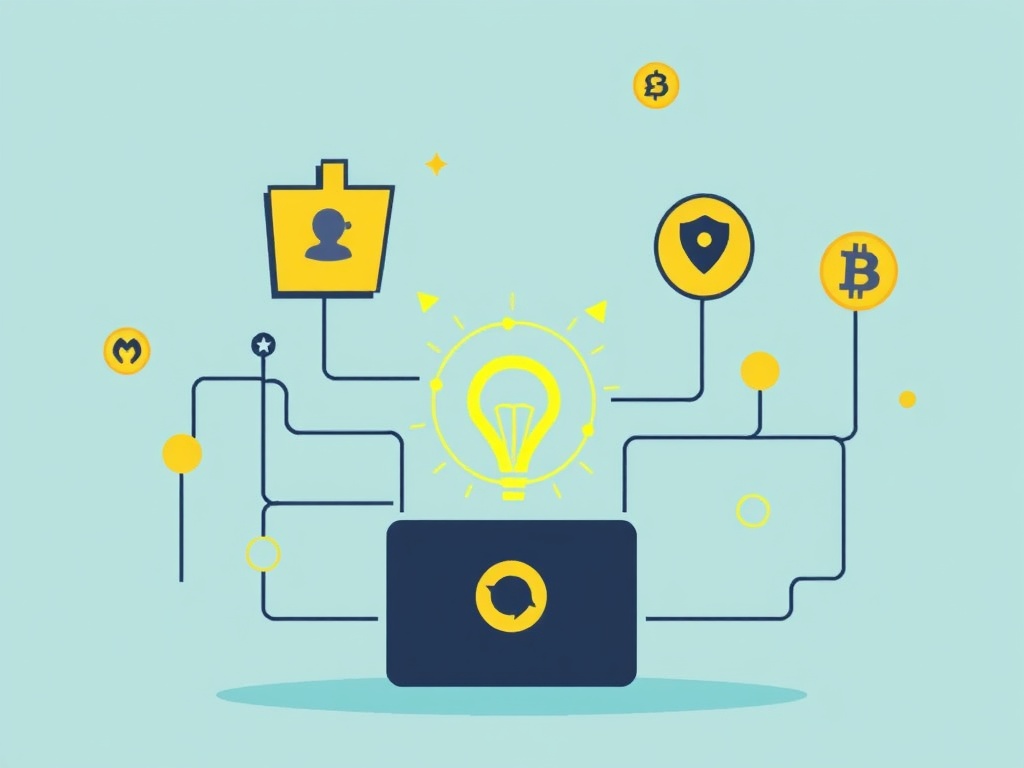
- Decentralized Identifiers (DIDs): Unique, cryptographically generated identifiers that are stored on a distributed ledger (e.g., blockchain) and controlled by the user. Unlike traditional identifiers (e.g., email addresses or usernames), DIDs are not tied to a central authority.
- Verifiable Credentials (VCs): Digital certificates (e.g., passports, diplomas, or professional licenses) that are cryptographically signed by issuers and can be verified by anyone without relying on a central database.
- Identity Wallets: Secure digital wallets that store DIDs, VCs, and private keys. Users can selectively share credentials without exposing underlying personal data.
- Blockchain or Distributed Ledger: A tamper-resistant ledger that stores DIDs and public keys, ensuring transparency and immutability.
- Zero-Knowledge Proofs (ZKPs): Cryptographic methods that allow users to prove the validity of a credential (e.g., age or membership status) without revealing the actual data.
The SSI Interaction Flow: A Step-by-Step Example
To illustrate how self-sovereign digital identity operates in practice, let’s walk through a typical interaction:
- Credential Issuance:
- A government issues a digital driver’s license as a Verifiable Credential (VC) to a user’s identity wallet.
- The VC is signed by the government’s private key and stored securely in the user’s wallet.
- Credential Storage:
- The user’s wallet stores the VC, along with the corresponding DID and private key.
- The DID is registered on a blockchain, while the VC remains off-chain for privacy.
- Credential Presentation:
- The user wants to prove their age to a bar. Instead of showing the full license, they use a Zero-Knowledge Proof to confirm they are over 21.
- The bar verifies the VC using the government’s public key, without accessing the user’s personal data.
- Revocation Check:
- The bar’s system checks the VC’s revocation status on the blockchain to ensure it hasn’t been revoked (e.g., due to license suspension).
- User Control:
- The user retains full control over when, where, and how their identity is shared.
This flow exemplifies the self-sovereign digital identity model: users manage their own identities, share only what’s necessary, and maintain privacy while ensuring authenticity.
Blockchain’s Role in Self-Sovereign Identity
While self-sovereign digital identity does not strictly require blockchain technology, distributed ledgers provide critical advantages:
- Immutability: Once a DID is recorded on a blockchain, it cannot be altered or deleted, ensuring long-term integrity.
- Decentralization: No single entity controls the identity data, reducing censorship and single points of failure.
- Transparency: Public blockchains allow anyone to verify the authenticity of a DID or VC without relying on a trusted third party.
- Interoperability: Standardized protocols (e.g., DID methods) enable identities to work across different platforms and jurisdictions.
However, blockchain is not the only solution. Some SSI systems use alternative distributed ledgers (e.g., Directed Acyclic Graphs or DAGs) or even peer-to-peer networks to achieve similar goals. The choice of technology often depends on scalability, cost, and regulatory requirements.
Benefits of Self-Sovereign Digital Identity: Why It Matters
Enhanced Privacy and Data Protection
One of the most compelling advantages of self-sovereign digital identity is its ability to restore privacy in an increasingly surveilled digital world. Traditional identity systems often require users to surrender personal data to corporations or governments, exposing them to risks such as:
- Data breaches and identity theft
- Unwanted tracking and profiling
- Surveillance capitalism (e.g., targeted advertising based on personal data)
With self-sovereign digital identity, users can:
- Minimize Data Exposure: Share only the necessary credentials (e.g., proof of age without revealing birth date).
- Prevent Unauthorized Tracking: Avoid persistent identifiers that link activities across different services.
- Retain Anonymity When Desired: Use selective disclosure to maintain privacy while still proving identity attributes.
This aligns with global privacy regulations like the General Data Protection Regulation (GDPR) in the EU, which emphasizes data minimization and user consent.
Improved Security Against Fraud and Theft
Centralized identity systems are prime targets for cybercriminals. In contrast, self-sovereign digital identity reduces fraud risks by:
- Eliminating Single Points of Failure: Since identity data is distributed and encrypted, hacking a single database won’t compromise user identities.
- Using Cryptographic Proofs: Verifiable Credentials are signed and can be independently verified, making forgery nearly impossible.
- Enabling Revocation Mechanisms: If a credential is compromised, it can be revoked and replaced without affecting the user’s entire identity.
For industries like finance, healthcare, and e-commerce—where identity fraud is rampant—self-sovereign digital identity offers a robust defense mechanism.
User Empowerment and Autonomy
At its heart, self-sovereign digital identity is about giving users agency over their digital lives. This empowerment manifests in several ways:
- Ownership of Identity: Users are no longer dependent on third parties to vouch for their identity.
- Portability: Identities can be used across borders and platforms without re-verification.
- Informed Consent: Users decide who can access their data and under what conditions.
- Financial Inclusion: Individuals without formal IDs (e.g., refugees or unbanked populations) can establish verifiable identities through trusted issuers.
This shift from institutional control to user sovereignty is particularly relevant in the btcmixer_en2 niche, where privacy-focused financial transactions and decentralized finance (DeFi) are gaining prominence.
Cost Efficiency and Operational Streamlining
For businesses and governments, adopting self-sovereign digital identity can lead to significant cost savings and efficiency gains:
- Reduced Identity Verification Costs: Automated credential verification reduces manual checks and fraud-related losses.
- Lower Compliance Burdens: Streamlined identity processes can simplify Know Your Customer (KYC) and Anti-Money Laundering (AML) requirements.
- Enhanced Customer Trust: Businesses that prioritize user privacy can build stronger brand loyalty and compliance with privacy laws.
In the context of btcmixer_en2, where users seek anonymity and security in financial transactions, self-sovereign digital identity can enhance trust in decentralized mixing services and privacy coins.
Challenges and Considerations in Implementing Self-Sovereign Identity
Technical and Scalability Hurdles
Despite its promise, self-sovereign digital identity faces several technical challenges:
- Scalability: Blockchain-based identity systems must handle millions of transactions without congestion or high fees.
- Interoperability: Ensuring that identities work seamlessly across different blockchains, wallets, and platforms remains a hurdle.
- User Experience: Managing cryptographic keys and credentials can be complex for non-technical users.
- Recovery Mechanisms: If a user loses their private key or wallet, recovering their identity without a central authority is difficult.
Solutions such as hierarchical deterministic wallets, social recovery mechanisms, and improved user interfaces are being developed to address these issues.
Regulatory and Legal Barriers
The decentralized nature of self-sovereign digital identity often conflicts with existing legal frameworks, which were designed for centralized systems. Key challenges include:
- Jurisdictional Issues: How do governments enforce laws (e.g., AML, tax compliance) when identities are not tied to a specific jurisdiction?
- Liability and Accountability: Who is responsible if a user’s identity is compromised due to their own negligence (e.g., losing a private key)?
- Data Sovereignty: Conflicts arise when users store identities on foreign blockchains or under different legal regimes.
To overcome these barriers, collaborations between technologists, policymakers, and regulators are essential. Initiatives like the eSSIF-Lab in Europe are working to bridge the gap between SSI and regulatory compliance.
Adoption and Awareness Gaps
While self-sovereign digital identity has gained traction in niche communities (e.g., cryptocurrency, blockchain), widespread adoption remains limited due to:
- Lack of Awareness: Many users and businesses are unaware of SSI or its benefits.
- Resistance to Change: Institutions accustomed to centralized control may be reluctant to adopt decentralized models.
- Fragmented Standards: Competing protocols and lack of universal standards can create confusion and fragmentation.
Education and standardization efforts, such as those led by the W3C Decentralized Identifiers Working Group, are critical to driving adoption.
Security Risks in Decentralized Systems
While self-sovereign digital identity reduces certain risks, it introduces new security considerations:
- Private Key Management: Losing a private key can result in permanent loss of access to one’s identity.
- Sybil Attacks: Malicious actors could create multiple fake identities if verification processes are weak.
- Smart Contract Vulnerabilities: If identity contracts on a blockchain are poorly coded, they could be exploited.
Robust cryptographic practices, multi-signature wallets, and decentralized identity oracles are being developed to mitigate these risks.
Self-Sovereign Digital Identity in the BTCMixer_EN2 Niche: Privacy, Security, and Financial Freedom
The Intersection of SSI and Privacy-Focused Finance
The btcmixer_en2 niche—centered around Bitcoin mixing services, privacy coins, and decentralized finance—shares a common ethos with self-sovereign digital identity: the preservation of financial privacy and user autonomy. Both movements challenge the status quo of surveillance and control in digital finance.
In this context, self-sovereign digital identity can enhance privacy-focused financial services by:
- Enabling Anonymous or Pseudonymous Transactions: Users can verify their eligibility (e.g., age, residency) without revealing their full identity, allowing them to use mixing services without exposing personal data.
- Reducing KYC/AML Friction: Mixing
 Robert HayesDeFi & Web3 Analyst
As a DeFi and Web3 analyst, I see self-sovereign digital identity as one of the most transformative innovations in digital infrastructure—yet its adoption remains fragmented. The core premise—that individuals should own and control their identity data without relying on centralized authorities—aligns perfectly with the ethos of decentralization. However, the practical challenges are substantial. Current implementations often struggle with interoperability, scalability, and user experience. For instance, while protocols like DID (Decentralized Identifiers) and VCs (Verifiable Credentials) provide foundational frameworks, integrating them into real-world applications—such as KYC for DeFi protocols or DAO governance—requires seamless onboarding. The gap between theoretical promise and operational reality is where most projects falter.
From a DeFi perspective, self-sovereign digital identity could revolutionize risk management and compliance. Imagine a lending protocol where borrowers verify their identity and creditworthiness on-chain without exposing sensitive data to third parties. This not only reduces counterparty risk but also opens doors for underbanked populations to access financial services. Yet, the devil is in the details: how do we prevent sybil attacks while preserving privacy? Solutions like zero-knowledge proofs (ZKPs) and soulbound tokens (SBTs) are promising, but their adoption hinges on robust infrastructure. My take? The next wave of Web3 adoption will belong to projects that can balance self-sovereignty with practical utility—where identity isn’t just a buzzword but a functional tool for users and developers alike.