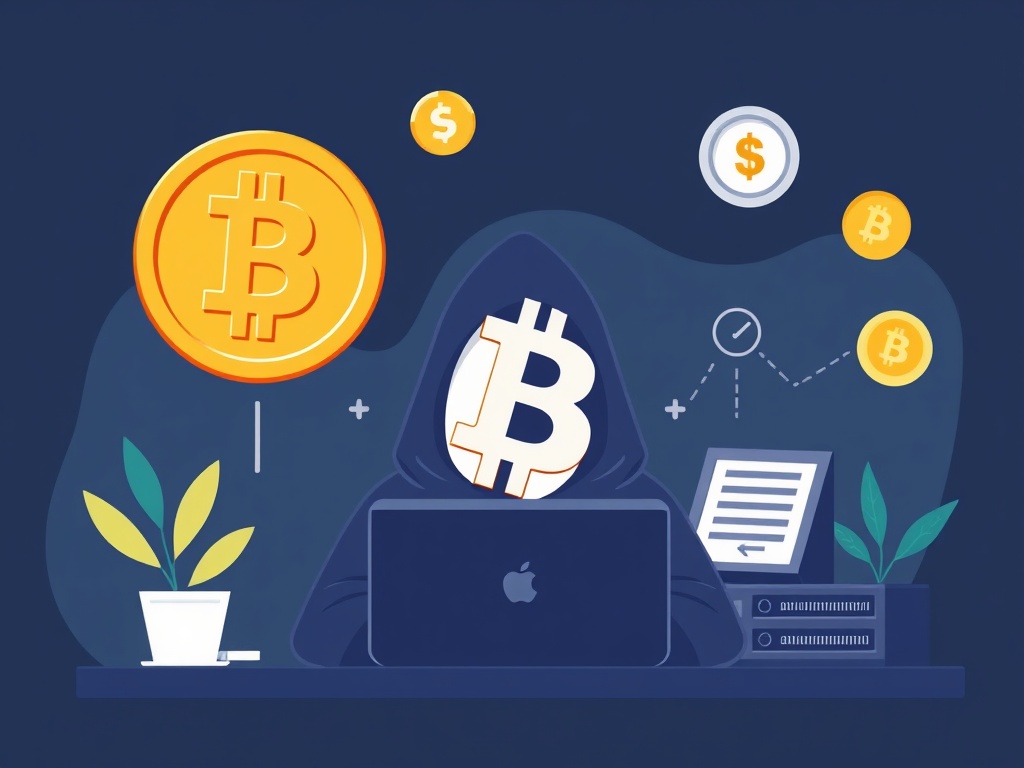
Understanding Confidential Gas Payment: A Secure Approach to Anonymous Transactions
Understanding Confidential Gas Payment: A Secure Approach to Anonymous Transactions
In an era where financial privacy is increasingly under threat, individuals and businesses alike are seeking secure alternatives for their transactions. One such solution gaining traction is the confidential gas payment, a method designed to protect sensitive financial data while ensuring seamless transactions. This article explores the concept of confidential gas payment in depth, its benefits, implementation, and how it aligns with the evolving needs of modern finance.
The rise of digital currencies and decentralized finance (DeFi) has introduced new paradigms for financial privacy. Among these, confidential gas payment stands out as a critical innovation, particularly for those who prioritize anonymity and security in their transactions. Whether you're a crypto enthusiast, a business owner, or simply someone concerned about financial privacy, understanding this concept can provide valuable insights into safeguarding your assets.
This comprehensive guide will cover everything from the basics of confidential gas payment to advanced strategies for maximizing its potential. By the end of this article, you'll have a clear understanding of how this method works, its advantages, and how to integrate it into your financial strategy.
The Importance of Confidential Gas Payment in Modern Finance
Financial privacy is not just a luxury—it's a necessity in today's interconnected world. With cyber threats, data breaches, and invasive surveillance becoming more prevalent, individuals and businesses are turning to confidential gas payment as a reliable way to protect their transactions. But why is this method so crucial, and how does it address the growing concerns around financial transparency?
Why Financial Privacy Matters
Financial privacy is the cornerstone of personal and business security. Without it, individuals risk exposure to identity theft, fraud, and unwanted scrutiny. For businesses, maintaining confidentiality in transactions can prevent competitive disadvantages and protect sensitive financial data from competitors or malicious actors.
The traditional banking system, while secure in many ways, often lacks the anonymity that modern users demand. Banks and financial institutions are subject to regulations that require them to monitor and report transactions, which can inadvertently expose users' financial activities. This is where confidential gas payment comes into play, offering a decentralized and private alternative.
The Role of Gas Fees in Cryptocurrency Transactions
In the world of cryptocurrencies, gas fees are the costs associated with processing transactions on a blockchain network. These fees are typically paid in the native cryptocurrency of the network (e.g., Ethereum's ETH or Bitcoin's BTC). However, the transparency of blockchain transactions means that anyone can trace these payments, potentially compromising the user's privacy.
This is where confidential gas payment becomes invaluable. By leveraging privacy-focused technologies, users can obscure the details of their transactions, including gas fees, ensuring that their financial activities remain confidential. This is particularly important for those who wish to keep their crypto holdings and transactions private from prying eyes.
How Confidential Gas Payment Enhances Security
Security is a top priority for anyone handling digital assets. Traditional gas payments on public blockchains expose users to risks such as:
- Transaction tracing: Anyone can follow the flow of funds on a public blockchain, making it easy for adversaries to track financial activities.
- Wallet linking: If a user's wallet address is associated with their identity, all transactions linked to that address can be traced back to them.
- Phishing and scams: Public transaction histories can be exploited by scammers to target users with fake investment schemes or blackmail attempts.
By using confidential gas payment, users can mitigate these risks. Privacy-enhancing technologies such as zero-knowledge proofs (ZKPs), ring signatures, and stealth addresses obscure transaction details, making it nearly impossible for third parties to link transactions to specific individuals or wallets.
How Confidential Gas Payment Works: A Technical Overview
Understanding the mechanics behind confidential gas payment is essential for anyone looking to implement this method. While the specifics can vary depending on the technology used, the core principles remain consistent across different privacy-focused solutions.
The Role of Privacy Coins and Protocols
Privacy coins like Monero (XMR), Zcash (ZEC), and Dash (DASH) are designed specifically to enhance transaction confidentiality. These cryptocurrencies use advanced cryptographic techniques to obscure transaction details, including the sender, receiver, and amount transferred. When integrated with gas payment systems, these protocols can provide a confidential gas payment mechanism.
For example, Monero uses ring signatures and stealth addresses to ensure that transactions are untraceable. Ring signatures mix the user's transaction with others, making it difficult to determine the true sender. Stealth addresses generate a unique, one-time address for each transaction, preventing anyone from linking past or future transactions to a single wallet.
Zero-Knowledge Proofs and Their Application
Zero-knowledge proofs (ZKPs) are a revolutionary cryptographic tool that allows one party to prove the validity of a statement without revealing any additional information. In the context of confidential gas payment, ZKPs can be used to verify that a transaction is valid (e.g., the user has sufficient funds to cover the gas fee) without disclosing the sender's identity or the exact amount being paid.
Zcash, for instance, employs zk-SNARKs (a type of ZKP) to enable shielded transactions. These transactions hide the sender, receiver, and amount, while still allowing the network to validate the transaction's legitimacy. This makes confidential gas payment possible on networks like Ethereum, where gas fees are typically transparent.
Layer 2 Solutions and Privacy Enhancements
Layer 2 solutions, such as zk-Rollups and Optimistic Rollups, are designed to improve scalability and reduce transaction costs on blockchain networks. These solutions can also enhance privacy by batching multiple transactions into a single proof, which is then submitted to the main chain. This process obscures individual transaction details, making it harder to trace specific payments.
For example, zk-Rollups like zkSync and StarkNet use zero-knowledge proofs to validate transactions off-chain before submitting them to the main blockchain. This not only reduces gas fees but also provides an additional layer of privacy, making confidential gas payment more accessible to users.
Mixers and Tumblers: An Alternative Approach
Another method for achieving confidential gas payment is through the use of mixers or tumblers. These services pool transactions from multiple users and redistribute the funds, making it difficult to trace the origin of any individual payment. While mixers have faced regulatory scrutiny due to their potential use in money laundering, they remain a popular choice for privacy-conscious users.
For instance, services like Tornado Cash allow users to deposit cryptocurrency into a shared pool and withdraw an equivalent amount from a different address. This process severs the on-chain link between the sender and receiver, effectively anonymizing the transaction. When combined with gas payment mechanisms, this can provide a robust solution for confidential transactions.
Benefits of Using Confidential Gas Payment
The advantages of adopting confidential gas payment extend beyond mere privacy. This method offers a range of benefits that cater to both individual users and businesses looking to safeguard their financial activities.
Enhanced Financial Privacy
The most obvious benefit of confidential gas payment is the enhanced privacy it provides. By obscuring transaction details, users can protect their financial data from prying eyes, including governments, corporations, and malicious actors. This is particularly important for individuals living in regions with oppressive financial regulations or those who simply value their privacy.
For businesses, confidential transactions can prevent competitors from gaining insights into their financial strategies, supply chain details, or customer relationships. This competitive advantage is invaluable in industries where financial transparency can lead to exploitation.
Protection Against Censorship
In some jurisdictions, governments or financial institutions may censor or block transactions based on their origin, destination, or purpose. Confidential gas payment mitigates this risk by making transactions untraceable, thereby reducing the likelihood of censorship. This is especially relevant for individuals and businesses operating in politically unstable regions or under restrictive financial regimes.
For example, activists, journalists, and humanitarian organizations often rely on financial privacy to operate safely. By using confidential gas payment, they can ensure that their transactions remain unmonitored and uninterrupted.
Reduced Risk of Fraud and Scams
Public blockchains are transparent by design, which means that anyone can view transaction histories. This transparency can be exploited by scammers who use transaction data to target users with phishing attempts, blackmail, or fake investment schemes. By obscuring transaction details, confidential gas payment reduces the risk of such fraudulent activities.
Additionally, the use of privacy-enhancing technologies can prevent wallet linking attacks, where adversaries use transaction histories to identify and target specific wallets. This added layer of security is crucial for protecting digital assets.
Lower Transaction Costs
While privacy-focused solutions like mixers or Layer 2 protocols may introduce additional steps, they can also reduce overall transaction costs. For example, zk-Rollups batch multiple transactions into a single proof, which is then submitted to the main chain. This reduces the gas fees associated with each individual transaction, making confidential gas payment more cost-effective.
Furthermore, by reducing the computational load on the main chain, privacy solutions can improve network efficiency, leading to faster and cheaper transactions overall.
Compliance with Privacy Regulations
In an increasingly regulated financial landscape, compliance with privacy laws is a top priority for businesses. Confidential gas payment can help organizations meet these requirements by ensuring that sensitive financial data is not exposed to unauthorized parties.
For instance, the General Data Protection Regulation (GDPR) in the European Union mandates strict controls over personal data. By using privacy-enhancing technologies, businesses can comply with these regulations while still conducting transactions on public blockchains.
Implementing Confidential Gas Payment: A Step-by-Step Guide
Adopting confidential gas payment requires a clear understanding of the available tools and technologies. This section provides a practical guide to implementing this method, from selecting the right privacy solution to integrating it into your existing financial workflows.
Step 1: Choose the Right Privacy Solution
The first step in implementing confidential gas payment is selecting a privacy solution that aligns with your needs. The options available include:
- Privacy coins: Cryptocurrencies like Monero, Zcash, or Dash that natively support confidential transactions.
- Mixers and tumblers: Services like Tornado Cash or Wasabi Wallet that obscure transaction trails.
- Layer 2 protocols: Solutions like zk-Rollups or Optimistic Rollups that enhance privacy while reducing gas fees.
- Privacy-focused wallets: Wallets like Samourai Wallet or Edge Wallet that integrate privacy features.
Each of these solutions has its own strengths and weaknesses, so it's important to evaluate them based on your specific requirements, such as transaction speed, cost, and ease of use.
Step 2: Set Up a Privacy-Focused Wallet
Once you've chosen a privacy solution, the next step is to set up a wallet that supports confidential transactions. For example, if you're using Monero, you'll need a wallet like the official Monero GUI wallet or a hardware wallet that supports XMR. For Ethereum-based solutions like Tornado Cash, you'll need an Ethereum-compatible wallet such as MetaMask.
When setting up your wallet, ensure that you follow best practices for security, such as enabling two-factor authentication (2FA), using a strong password, and storing your seed phrase securely. Additionally, consider using a hardware wallet for added protection against hacks and malware.
Step 3: Fund Your Wallet with Privacy Coins
If you're using a privacy coin like Monero or Zcash, you'll need to acquire the coin before you can make a confidential gas payment. This can be done through cryptocurrency exchanges, peer-to-peer (P2P) platforms, or decentralized exchanges (DEXs).
When purchasing privacy coins, be mindful of the exchange's policies regarding privacy. Some exchanges may require identity verification, which could compromise your anonymity. To maintain confidentiality, consider using decentralized exchanges or P2P platforms that do not require KYC (Know Your Customer) verification.
Step 4: Use a Mixer or Layer 2 Protocol for Gas Payments
If you're making gas payments on a public blockchain like Ethereum, you can use a mixer or Layer 2 protocol to obscure the transaction details. For example, to make a confidential gas payment on Ethereum, you could:
- Deposit ETH or another cryptocurrency into a mixer like Tornado Cash.
- Withdraw the funds to a new address that is not linked to your original wallet.
- Use the withdrawn funds to pay gas fees for your transactions.
Alternatively, you could use a Layer 2 solution like zkSync or StarkNet to batch your transactions and reduce gas fees while enhancing privacy.
Step 5: Monitor and Maintain Privacy
Implementing confidential gas payment is not a one-time process—it requires ongoing vigilance to ensure that your transactions remain private. Here are some best practices to follow:
- Use fresh addresses: Avoid reusing wallet addresses, as this can link your transactions together.
- Enable stealth addresses: If your privacy solution supports them, use stealth addresses to generate unique addresses for each transaction.
- Avoid metadata leaks: Be cautious about sharing transaction IDs or other metadata that could reveal information about your transactions.
- Regularly update your wallet: Ensure that your wallet software is up to date to protect against vulnerabilities.
Step 6: Integrate with Smart Contracts and DApps
If you're using confidential gas payment for decentralized applications (DApps) or smart contracts, you may need to take additional steps to ensure privacy. For example, some DApps may require you to reveal transaction details for compliance purposes. In such cases, consider using privacy-focused alternatives or negotiating with the DApp provider to accommodate your privacy needs.
Additionally, if you're interacting with smart contracts, ensure that the contract itself does not log sensitive data on-chain. Some privacy-focused smart contract platforms, like Secret Network, allow for confidential smart contract execution, further enhancing your privacy.
Common Challenges and Solutions for Confidential Gas Payment
While confidential gas payment offers significant advantages, it is not without its challenges. Understanding these obstacles and how to overcome them is crucial for anyone looking to adopt this method effectively.
Regulatory Scrutiny and Compliance Issues
One of the biggest challenges facing confidential gas payment is regulatory scrutiny. Governments and financial institutions are increasingly cracking down on privacy-enhancing technologies due to concerns about money laundering, tax evasion, and illicit activities. For example, the U.S. Treasury's Office of Foreign Assets Control (OFAC) has sanctioned mixers like Tornado Cash, citing their use in facilitating illegal transactions.
To navigate these challenges, users and businesses must stay informed about regulatory developments and ensure that their use of confidential gas payment complies with local laws. This may involve:
- Using compliant mixers: Some mixers, like Wasabi Wallet, implement compliance features such as transaction limits or identity verification for large withdrawals.
- Documenting transactions: Maintaining records of transactions for tax or audit purposes, even if the details are obscured on-chain.
- Consulting legal experts: Seeking advice from professionals familiar with cryptocurrency regulations in your jurisdiction.
Liquidity and Accessibility Issues
Privacy-focused solutions often face liquidity challenges, particularly in the case of mixers and privacy coins. For example, some mixers may have limited liquidity, making it difficult to deposit or withdraw large amounts of cryptocurrency. Similarly, privacy coins like Monero may not be as widely accepted as Bitcoin or Ethereum, limiting their usability for everyday transactions.
To address these issues, consider the following strategies:
- Use decentralized exchanges (DEXs): DEXs like Bisq or Haveno allow users to trade privacy coins without requiring KYC verification.
- Bridge assets: Use cross-chain bridges to convert privacy coins into more widely accepted cryptocurrencies for gas payments.
- Explore Layer 2 solutions: Layer 2 protocols like zkSync or StarkNet can provide liquidity while enhancing privacy.
Technical Complexity and User Experience
Privacy-enhancing technologies can be complex, particularly for users who are not familiar with cryptographic concepts. The process of setting up a privacy-focused wallet, using a mixer, or interacting with Layer

Confidential Gas Payment: Balancing Privacy and Efficiency in Blockchain Transactions
As a senior crypto market analyst with over a decade of experience in digital asset research, I’ve observed that privacy remains one of the most persistent challenges in blockchain adoption. While public ledgers like Ethereum and Bitcoin offer transparency, they often fall short in protecting sensitive transaction details—particularly gas fees, which can reveal financial behavior patterns. Confidential gas payment solutions, such as those leveraging zero-knowledge proofs (ZKPs) or privacy-focused rollups, present a compelling middle ground. These innovations allow users to obscure transaction costs while maintaining the integrity of the network. From an institutional perspective, this is not just a privacy enhancement but a risk mitigation tool, as it reduces the exposure of sensitive financial data to potential adversaries or competitors.
Practically speaking, the implementation of confidential gas payment mechanisms requires careful consideration of trade-offs. On one hand, privacy-preserving techniques add computational overhead, which could impact transaction speeds and costs. On the other, the demand for such solutions is growing, particularly in sectors like DeFi and enterprise blockchain, where confidentiality is paramount. Projects like Aztec’s private rollups or Matter Labs’ zkSync Era are already demonstrating how confidential gas payments can be integrated without sacrificing scalability. For institutions evaluating blockchain adoption, these advancements should be a key criterion—balancing operational efficiency with the need for discretion in financial operations.