Transaction Red Flags in BTCmixer: How to Spot Suspicious Activity and Protect Your Crypto
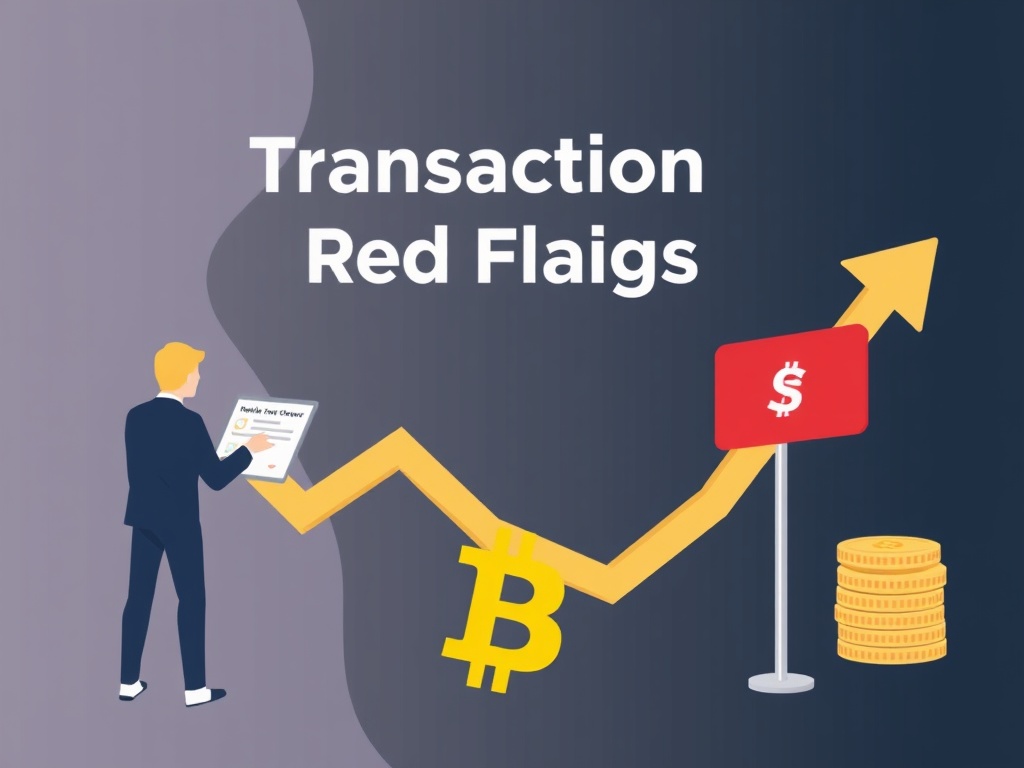
Transaction Red Flags in BTCmixer: How to Spot Suspicious Activity and Protect Your Crypto
In the fast-evolving world of cryptocurrency, privacy and security are paramount. BTCmixer, a popular Bitcoin mixing service, offers users a way to enhance their financial privacy by obscuring transaction trails. However, not all transactions are legitimate, and transaction red flags can signal fraudulent or high-risk activity. Recognizing these warning signs is crucial for both users and service providers to maintain a secure and trustworthy ecosystem.
This comprehensive guide explores the most common transaction red flags in the BTCmixer niche, helping you identify suspicious behavior before it leads to financial loss or legal complications. Whether you're a seasoned crypto enthusiast or a newcomer, understanding these indicators will empower you to make informed decisions and safeguard your digital assets.
Why Transaction Red Flags Matter in BTCmixer Services
BTCmixer services play a vital role in preserving user anonymity by mixing Bitcoin transactions with those of other users. This process breaks the on-chain link between the sender and receiver, making it difficult to trace funds. However, the anonymity provided by these services can also attract malicious actors seeking to launder illicit funds, commit fraud, or evade regulatory scrutiny.
Identifying transaction red flags is essential for several reasons:
- Preventing Financial Loss: Recognizing suspicious transactions early can help users avoid scams, phishing attacks, or unauthorized withdrawals.
- Ensuring Regulatory Compliance: Mixing services must adhere to anti-money laundering (AML) and know-your-customer (KYC) regulations. Spotting red flags helps maintain compliance and avoid legal penalties.
- Protecting the BTCmixer Ecosystem: By filtering out high-risk transactions, legitimate users can continue to benefit from privacy-enhancing services without the shadow of illicit activity.
- Enhancing Security: Transaction monitoring reduces the risk of funds being linked to criminal enterprises, protecting the reputation of the mixing service.
In the following sections, we’ll delve into the specific transaction red flags that users and service providers should watch for when using or operating a BTCmixer platform.
Common Transaction Red Flags in BTCmixer Services
Not all transactions processed by a BTCmixer are inherently suspicious, but certain patterns and behaviors should raise immediate concerns. Below are the most prevalent transaction red flags to be aware of:
1. Unusually Large or Frequent Transactions
One of the most glaring transaction red flags is the movement of unusually large sums of Bitcoin in a short period. While BTCmixer services are designed to handle significant volumes, transactions that deviate drastically from typical user behavior warrant scrutiny.
For example:
- A user deposits 1,000 BTC in a single transaction when the average deposit is 0.5 BTC.
- Multiple deposits of 50 BTC each within minutes, totaling 500 BTC, without a clear justification.
- Withdrawals that match the deposit amounts precisely, suggesting a lack of actual mixing.
Why it’s a red flag: Large or frequent transactions may indicate money laundering, where criminals attempt to obscure the origin of illicit funds. Additionally, automated bots or scripts may generate these transactions to test the system’s response to high-volume activity.
2. Rapid Deposits and Withdrawals
BTCmixer services are intended to introduce delays and randomness to break transaction trails. However, transactions that are deposited and withdrawn almost instantaneously are a major transaction red flag.
Consider the following scenarios:
- A user deposits Bitcoin and withdraws an equivalent amount within minutes.
- Multiple users deposit funds into the same mixing pool and withdraw them in quick succession without any apparent mixing.
- Withdrawals occur in the exact same order as deposits, suggesting a lack of randomization.
Why it’s a red flag: Rapid deposits and withdrawals defeat the purpose of mixing, which is to introduce delays and obfuscate transaction paths. This behavior is often associated with "chain-hopping," where users attempt to launder funds by quickly moving them through multiple mixing services.
3. Transactions Involving Known Illicit Addresses
Blockchain forensics tools can identify Bitcoin addresses associated with illegal activities, such as darknet markets, ransomware attacks, or sanctioned entities. If a BTCmixer receives funds from or sends funds to such addresses, it’s a critical transaction red flag.
Key indicators include:
- Deposits from addresses linked to darknet markets (e.g., Silk Road, AlphaBay).
- Withdrawals to addresses flagged by regulatory bodies (e.g., OFAC-sanctioned addresses).
- Transactions involving addresses known for phishing scams or Ponzi schemes.
Why it’s a red flag: Processing transactions tied to illicit activities can expose the BTCmixer to legal repercussions, including fines, shutdowns, or criminal charges. Service providers must implement robust screening mechanisms to block such transactions.
4. Lack of Diversification in Transaction Patterns
A healthy mixing process should result in diverse and randomized transaction patterns. If a user’s deposits and withdrawals follow a predictable or repetitive structure, it’s a transaction red flag that suggests manipulation or fraud.
Examples of suspicious patterns include:
- Deposits and withdrawals always occurring at the same time of day.
- Withdrawals consistently sent to the same set of addresses.
- Transactions that follow a mathematical sequence (e.g., Fibonacci numbers, prime numbers).
Why it’s a red flag: Predictable transaction patterns can indicate the use of automated tools or scripts designed to exploit the mixing service. Additionally, such patterns may be used to "wash" transactions, making them appear legitimate when they are not.
5. Transactions from High-Risk Jurisdictions
Certain jurisdictions are known for high levels of financial crime, corruption, or weak regulatory oversight. Transactions originating from or destined for these regions are a significant transaction red flag in the BTCmixer ecosystem.
High-risk jurisdictions may include:
- Countries with known ties to terrorism financing (e.g., as designated by the FATF).
- Nations with strict capital controls or histories of financial fraud (e.g., certain offshore tax havens).
- Regions under international sanctions (e.g., North Korea, Iran).
Why it’s a red flag: Transactions involving high-risk jurisdictions increase the likelihood of money laundering or sanctions evasion. BTCmixer services must exercise heightened due diligence when processing such transactions to avoid legal and reputational damage.
Advanced Techniques for Detecting Transaction Red Flags
While the transaction red flags outlined above are relatively straightforward, advanced techniques can uncover more subtle indicators of suspicious activity. These methods leverage blockchain analytics, machine learning, and behavioral analysis to identify high-risk transactions.
1. Blockchain Forensics and Address Clustering
Blockchain forensics tools, such as Chainalysis, CipherTrace, and Elliptic, analyze transaction patterns to cluster addresses controlled by the same entity. This technique can reveal transaction red flags such as:
- Addresses that have interacted with known illicit services.
- Sudden shifts in transaction behavior (e.g., from small, frequent transactions to large, infrequent ones).
- Addresses that receive funds from multiple mixing services in quick succession.
Example: If an address that previously received funds from a darknet market suddenly starts using a BTCmixer service, it’s a strong indicator of money laundering.
2. Behavioral Analysis and Anomaly Detection
Machine learning algorithms can analyze transaction data to detect anomalies that may not be immediately apparent. These algorithms identify transaction red flags by comparing user behavior against established baselines.
Key metrics analyzed include:
- Transaction Volume: Sudden spikes or drops in transaction size.
- Transaction Frequency: Unusual patterns in the timing of deposits and withdrawals.
- Address Reuse: Repeated use of the same deposit or withdrawal addresses.
- Geographic Patterns: Transactions originating from or destined for high-risk regions.
Example: A user who typically deposits 0.1 BTC every week suddenly deposits 10 BTC in a single transaction. The algorithm flags this as an anomaly, warranting further investigation.
3. Graph Analysis and Transaction Tracing
Graph analysis tools visualize the flow of Bitcoin between addresses, helping to identify transaction red flags such as:
- Circular Transactions: Funds moving in a loop between a small set of addresses to create the illusion of activity.
- Peeling Chains: A technique where small amounts are "peeled" off a larger transaction to obscure its origin.
- Mixing Pool Manipulation: Users attempting to manipulate the mixing process by controlling a significant portion of a mixing pool.
Example: If a graph analysis reveals that 80% of the funds in a mixing pool are controlled by a single entity, it suggests manipulation and is a major transaction red flag.
4. Regulatory and Compliance Screening
BTCmixer services must comply with AML and KYC regulations, which require screening transactions against sanctions lists, politically exposed persons (PEPs), and other high-risk entities. Failure to implement robust compliance measures can result in severe penalties.
Common compliance screening techniques include:
- Sanctions Screening: Checking deposits and withdrawals against lists from OFAC, UN, or EU.
- PEP Screening: Identifying transactions involving politically exposed persons who may be using mixing services to hide wealth.
- Adverse Media Screening: Monitoring for news or reports linking addresses to illicit activities.
Example: If a user attempts to deposit funds from an address linked to a sanctioned entity, the BTCmixer service should block the transaction and report it to the appropriate authorities.
How BTCmixer Services Can Mitigate Transaction Red Flags
For BTCmixer platforms to maintain their legitimacy and avoid regulatory scrutiny, they must implement proactive measures to detect and mitigate transaction red flags. Below are best practices for service providers to enhance security and compliance.
1. Implementing Robust KYC and AML Policies
Know-your-customer (KYC) and anti-money laundering (AML) policies are essential for identifying and preventing suspicious activity. BTCmixer services should:
- Require Identity Verification: Users must provide government-issued IDs, proof of address, and other identifying documents.
- Conduct Enhanced Due Diligence (EDD): For high-risk transactions, additional verification steps should be implemented, such as source of funds documentation.
- Monitor Transactions in Real-Time: Automated systems should flag transactions that exhibit transaction red flags for manual review.
Example: A user attempting to deposit 100 BTC without prior verification should trigger an EDD process, including a review of the source of funds.
2. Using Advanced Blockchain Analytics Tools
BTCmixer services should integrate blockchain analytics tools to monitor transactions for transaction red flags. These tools can:
- Identify Illicit Addresses: Screen deposits and withdrawals against known illicit address databases.
- Detect Anomalies: Use machine learning to identify unusual transaction patterns.
- Analyze Mixing Pool Dynamics: Monitor for manipulation or control of mixing pools by a single entity.
Example: If a blockchain analytics tool detects that a user’s deposit address is linked to a ransomware attack, the transaction should be blocked, and the user’s account should be flagged for further review.
3. Introducing Delays and Randomization in the Mixing Process
One of the primary purposes of a BTCmixer is to introduce delays and randomness to break transaction trails. To combat transaction red flags, services should:
- Implement Variable Delays: Instead of fixed delays, use randomized time windows for withdrawals.
- Introduce Randomization in Output Addresses: Ensure that withdrawals are sent to a diverse set of addresses to prevent predictability.
- Limit Pool Sizes: Prevent a single user from controlling a significant portion of a mixing pool.
Example: A user deposits 5 BTC and requests a withdrawal after 24 hours. Instead of sending the funds to a single address, the service splits the withdrawal into multiple smaller transactions sent to different addresses over a randomized timeframe.
4. Educating Users on Safe Transaction Practices
User education is a critical component of mitigating transaction red flags. BTCmixer services should provide clear guidelines on safe transaction practices, including:
- Using Fresh Addresses: Avoid reusing Bitcoin addresses to prevent address clustering.
- Setting Realistic Expectations: Explain that mixing is not instantaneous and may take time to complete.
- Reporting Suspicious Activity: Encourage users to report any unusual transactions or behavior.
Example: A BTCmixer service could include a FAQ section on its website, advising users to avoid depositing funds from exchanges that enforce KYC, as these may be easier to trace.
5. Collaborating with Regulatory Authorities and Industry Peers
BTCmixer services should actively engage with regulatory authorities and industry peers to stay informed about emerging transaction red flags and best practices. This collaboration can take the form of:
- Participating in Industry Working Groups: Join organizations like the Blockchain Alliance or the Chamber of Digital Commerce to share insights and stay updated on regulatory trends.
- Sharing Threat Intelligence: Collaborate with other mixing services to identify and block high-risk transactions.
- Engaging with Law Enforcement: Report suspicious activity to authorities and participate in investigations when necessary.
Example: If a new ransomware strain emerges, BTCmixer services should quickly update their illicit address databases and share this information with peers to prevent funds from being laundered through their platforms.
Case Studies: Real-World Examples of Transaction Red Flags
Examining real-world examples of transaction red flags can provide valuable insights into how criminals exploit mixing services and how these issues can be mitigated. Below are three case studies that highlight common patterns and lessons learned.
Case Study 1: The Silk Road Money Laundering Scheme
Background: The Silk Road, a darknet market shut down in 2013, was notorious for facilitating illegal drug sales and other illicit activities. Users of the Silk Road often turned to BTCmixer services to launder their proceeds.
Red Flags Identified:
- Large, Frequent Deposits: Silk Road users deposited large sums of Bitcoin in short periods to avoid detection.
- Rapid Withdrawals: Funds were withdrawn almost immediately after mixing, defeating the purpose of the service.
- Predictable Patterns: Transactions followed a repetitive structure, making them easier to trace.
Outcome: Law enforcement agencies used blockchain forensics to trace the flow of funds, leading to the arrest of Silk Road’s operator, Ross Ulbricht. This case underscored the importance of monitoring transaction red flags in mixing services.
Case Study 2: The Twitter Bitcoin Scam of 2020
Background: In July 2020, hackers compromised high-profile Twitter accounts, including those of Elon Musk, Barack Obama, and Bill Gates, to promote a Bitcoin scam. Victims were directed to send Bitcoin to a specific address, with the promise of receiving double their money in return.
Red Flags Identified:
-
 David ChenDigital Assets Strategist
Identifying Transaction Red Flags in Digital Asset Markets: A Data-Driven Approach
As a digital assets strategist with a background in both traditional finance and cryptocurrency markets, I’ve observed that transaction red flags are often the first indicators of market manipulation, fraud, or inefficiencies. In my work, I rely on a combination of on-chain analytics, quantitative modeling, and behavioral pattern recognition to detect anomalies that deviate from normal market activity. For instance, sudden spikes in transaction volume without corresponding price movement may signal wash trading, while rapid, high-frequency transfers between wallets with no clear economic purpose can indicate coordinated manipulation. These red flags are not just academic concerns—they directly impact portfolio performance and risk exposure, making early detection critical for institutional and retail investors alike.
Practical insights are essential when evaluating transaction red flags. One key metric I prioritize is the ratio of transaction volume to price volatility, as unusually high volume relative to price changes often precedes market distortions. Additionally, clustering wallet addresses based on transaction patterns can reveal suspicious behavior, such as funds moving from exchanges to private wallets in a short timeframe, which may indicate potential exit scams or insider activity. By integrating these analytical techniques with real-time monitoring tools, investors can mitigate risks and make more informed decisions. Ultimately, transaction red flags are not just about spotting bad actors—they’re about understanding the underlying dynamics of digital asset markets to navigate them more effectively.